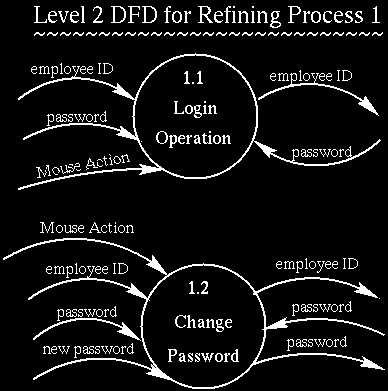
To prevent intruders from getting into the system, each user is required
to go through a login process before logging onto the system. Also, a user
may want to change his/her password after a period of time, so he/she can
make such change before logging onto the system. For this reason, process
login Operation is divided into two submodules - login process and change
password process.
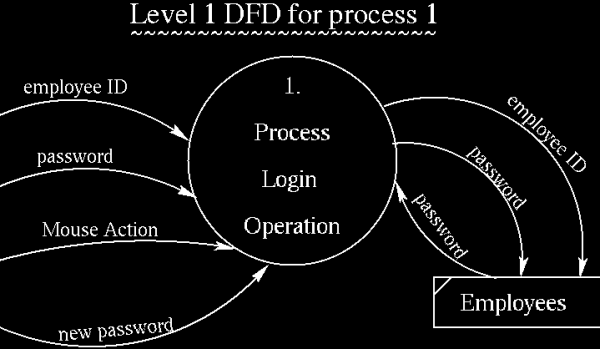
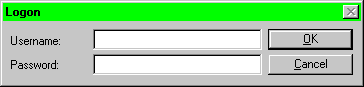 When the system starts up, the user is presented with the window named
"Logon." It contains two fields - Employee ID and Password. The
user has to fill in the Employee ID field. If the Password field is left
blank when the OK botton is clicked, it transfers to another process, i.e.
change password process which is process 1.2. If the Password field is
filled when the OK botton is clicked, the system verifies the Employee
ID and Password.
When the system starts up, the user is presented with the window named
"Logon." It contains two fields - Employee ID and Password. The
user has to fill in the Employee ID field. If the Password field is left
blank when the OK botton is clicked, it transfers to another process, i.e.
change password process which is process 1.2. If the Password field is
filled when the OK botton is clicked, the system verifies the Employee
ID and Password.
A correct entry of Employee ID and Password results in the Main Menu
being displayed. However, an incorrectly entered Employee ID and Password
results in a dialogue box being displayed which reads "Invalid Employee
ID or Password" and then it returns the "Logon" window with
both fields cleared.
The user might click on the Cancel botton if he/she wants to clear all
entries.
Note that when the password is entered, asterisks are displayed instead
of the entered characters.
| | | | | | | | | | |
1.2 Change Password Process
|
| | | | | | | | | |
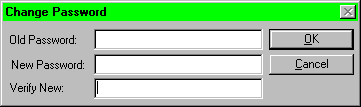 To get into this process, the user can only type in his/her Employee
ID on the "Logon" window when the OK button is clicked. Then,
the user is presented with the window called "Change Password."
It contains three fields - Old Password, New Password and Verify New. Old
Password is the password that is currently being used by the user. New
Password is the password that will be used by the user. The field, "Verify
New," is used for the verification of the new password, so the value
in this field has to be the same as that in the New Password field. Again,
asterisks are displayed on all fields instead of the entered characters.
To get into this process, the user can only type in his/her Employee
ID on the "Logon" window when the OK button is clicked. Then,
the user is presented with the window called "Change Password."
It contains three fields - Old Password, New Password and Verify New. Old
Password is the password that is currently being used by the user. New
Password is the password that will be used by the user. The field, "Verify
New," is used for the verification of the new password, so the value
in this field has to be the same as that in the New Password field. Again,
asterisks are displayed on all fields instead of the entered characters.
On success, the Main Menu is displayed. Else, it returns an empty "Logon"
window, i.e. go back to the process 1.1.
User may abort this process by pressing the Cancel button resulting
in the "Logon" window being displayed.
